Tesla axes Model S and X as revenues fall and focus shifts to AI and robotics
Tesla has reported its first annual fall in revenue as the electric carmaker accelerates a strategic shift away from legacy vehicle models and towards artificial intelligence and robotics.
The company said total revenues fell 3 per cent in 2025, marking the first year-on-year decline in its history, while profits plunged 61 per cent in the final three months of the year. Tesla also confirmed it will end production of its Model S and Model X, two of its longest-running vehicles.
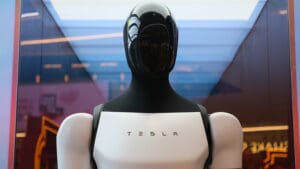
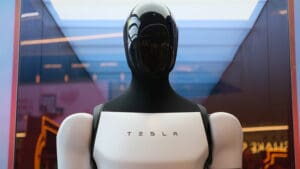
Manufacturing capacity at the California plant previously used for those models will be redirected towards Tesla’s humanoid robot programme, known as Optimus, underscoring the company’s push into robotics as a future growth engine.
The announcement comes as competition in the electric vehicle market intensifies. In January, China’s BYD overtook Tesla as the world’s largest EV maker by sales, while analysts have warned that Tesla’s vehicle line-up has begun to look dated.
Tesla also disclosed a $2bn (£1.45bn) investment in xAI, the AI venture founded by chief executive Elon Musk. Musk said the move reflected pressure from shareholders to back the company.
“A lot of investors asked us to do this,” he said on an earnings call. “They say we should invest in xAI, so we’re doing what shareholders asked us to do.”
The decision follows a recent shareholder vote on whether Tesla should invest in xAI, in which abstentions and votes against outweighed those in favour. It also comes less than a year after shareholders overwhelmingly approved a record-breaking pay package for Musk, potentially worth close to $1tn if ambitious market value targets are met over the next decade.
Tesla said capital spending is set to rise sharply, with Musk warning of around $20bn in investment ahead. “It’s going to be a very big capex next year,” he said. “We’re making big investments for an epic future.”
Shares in Tesla rose about 2 per cent in extended trading following the results.
The company’s strategic pivot has coincided with growing controversy around Musk’s political activities, including a high-profile cost-cutting role in the administration of Donald Trump. His involvement has alienated parts of Tesla’s customer base, with protests reported outside dealerships in several countries.
The shift away from core EV models also comes as the US government rolls back subsidies for non-fossil fuel vehicles, adding further pressure to Tesla’s automotive business. At the same time, the company is pushing deeper into robotaxis and autonomous technology, betting that AI-led services will underpin its next phase of growth.
Jessica Caldwell, head of insights at Edmunds, said the decision to drop the Model S and X was not unexpected.
“They’ve been low-volume vehicles for a while,” she said. “From a portfolio and focus standpoint, it makes sense to concentrate on higher-volume products like the Model 3 and Model Y, while doubling down on new growth bets.”
The results mark a turning point for Tesla, once one of the world’s most profitable carmakers, as it attempts to reinvent itself as a broader AI and robotics business amid slowing EV growth and intensifying global competition.
Read more:
Tesla axes Model S and X as revenues fall and focus shifts to AI and robotics