
Marmite and Hellmann’s to join US giant in £50bn flavour deal
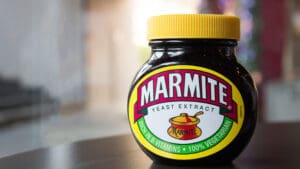
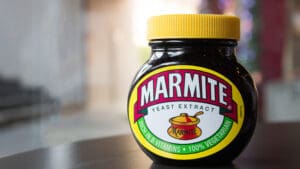
Unilever has agreed a £50 billion ($66 billion) deal to combine its food brands with McCormick & Company, placing household names such as Marmite, Hellmann’s and Colman’s mustard under American leadership.
The transaction will create what both companies describe as a “global flavour powerhouse”, bringing together Unilever’s food portfolio, including Knorr, Bovril and Pot Noodle, with McCormick’s existing brands such as French’s mustard and Schwartz spices.
Under the terms of the agreement, Unilever will retain a 65 per cent stake in the combined entity, but the business will operate under McCormick’s name and management, with headquarters in the United States and a listing in New York. The Anglo-Dutch group will also receive $15.7 billion in cash.
The deal represents another major step in Unilever’s ongoing strategy to streamline its portfolio and focus on higher-growth areas such as personal care and beauty.
Chief executive Fernando Fernández said the move would unlock value by separating out the food division and combining it with a partner that has deep expertise in flavourings and seasonings.
“We are creating a scaled, global business with strong growth potential,” he said, describing the transaction as a decisive step in repositioning the company.
The sale follows a series of divestments, including the disposal of Unilever’s spreads business in 2017 and the sale of its tea division in 2022, as well as the recent demerger of its ice cream operations.
The companies expect to generate around $600 million in cost savings from the deal, largely through greater purchasing power and operational efficiencies.
However, the prospect of such savings has raised concerns about potential job losses and factory closures, particularly in the UK, where several of the brands have deep historical roots.
Brendan Foley, McCormick’s chairman, acknowledged that efficiencies could extend to manufacturing and distribution, although he stopped short of confirming any specific plans.
The deal has sparked a backlash among some industry figures and commentators, reflecting the cultural significance of brands such as Marmite, which has been produced in Burton-on-Trent since 1902, and Colman’s mustard, which dates back to 1814 in Norwich.
Critics argue that these products risk losing their identity as they become part of a larger global conglomerate, with concerns that strategic decisions could prioritise efficiency over heritage.
The transaction also continues a broader trend of historic British food brands coming under foreign ownership, following previous takeovers involving companies such as Cadbury and Lea & Perrins.
Investors reacted cautiously to the announcement, with Unilever’s shares falling more than 7 per cent following the news.
Analysts have pointed to the long timeline for completion, expected in mid-2027, as a source of uncertainty, with regulatory approvals and integration risks still to be navigated.
If completed, the deal will reshape the global food and flavourings market, creating a combined entity with significant scale and reach.
For Unilever, it marks a continued pivot away from traditional food brands towards faster-growing consumer categories. For McCormick, it represents a major expansion that strengthens its position as a global leader in flavour.
For consumers, the immediate impact may be limited. However, over time, decisions around pricing, production and branding could determine how these iconic products evolve under new ownership.
As the deal progresses, attention will focus on whether the promised growth and efficiencies can be delivered, and what it ultimately means for the future of some of Britain’s most recognisable food brands.
Read more:
Marmite and Hellmann’s to join US giant in £50bn flavour deal