
Lloyds shares: is £1.15 or 70p next?


Lloyds‘ (LSE:LLOY) shares have lost their momentum. Since hitting 115p in early February, theyâve fallen as low as 88p. Now, while they could rebound to £1.15 in 2026, I wouldnât rule out a move lower.
Hereâs a look at how they could potentially fall back to 70p.
High oil prices could hurt the banks
The way I see it, there are three main risks for Lloyds right now. The first is a prolonged period of high oil prices. This would almost certainly be bad for the banks, because high oil prices tend to hurt consumers and businesses and lead to a slowdown in economic growth.
For banks, a slowdown in economic growth tends to translate to lower demand for loans and/or high loan defaults. This, in turn, translates to lower profits.
Itâs worth noting that a sharp increase in oil prices (like weâve just seen) tends to be more damaging to consumers than a slow rise. A sharp spike can really mess with peopleâs finances (eg sudden petrol cost spikes) and impact their ability to service loans.
A new source of competition
The next risk is competition from digital bank Revolut. No oneâs really talking about this right now, but I donât think we can ignore it. Revolut now has a full UK banking licence. This means that it can compete with Lloyds in areas such as savings accounts and loans.
I expect it to capture market share from the traditional banks in the years ahead. Because it has a really compelling offering.
For example, pay £14.99 a month for its Metal card and you get travel insurance, Uber One membership, access to Perplexity Pro, a Financial Times digital subscription, Class Pass vouchers, WeWork credits, NordVPN access, and more. I donât see Lloyds offering great deals like this.
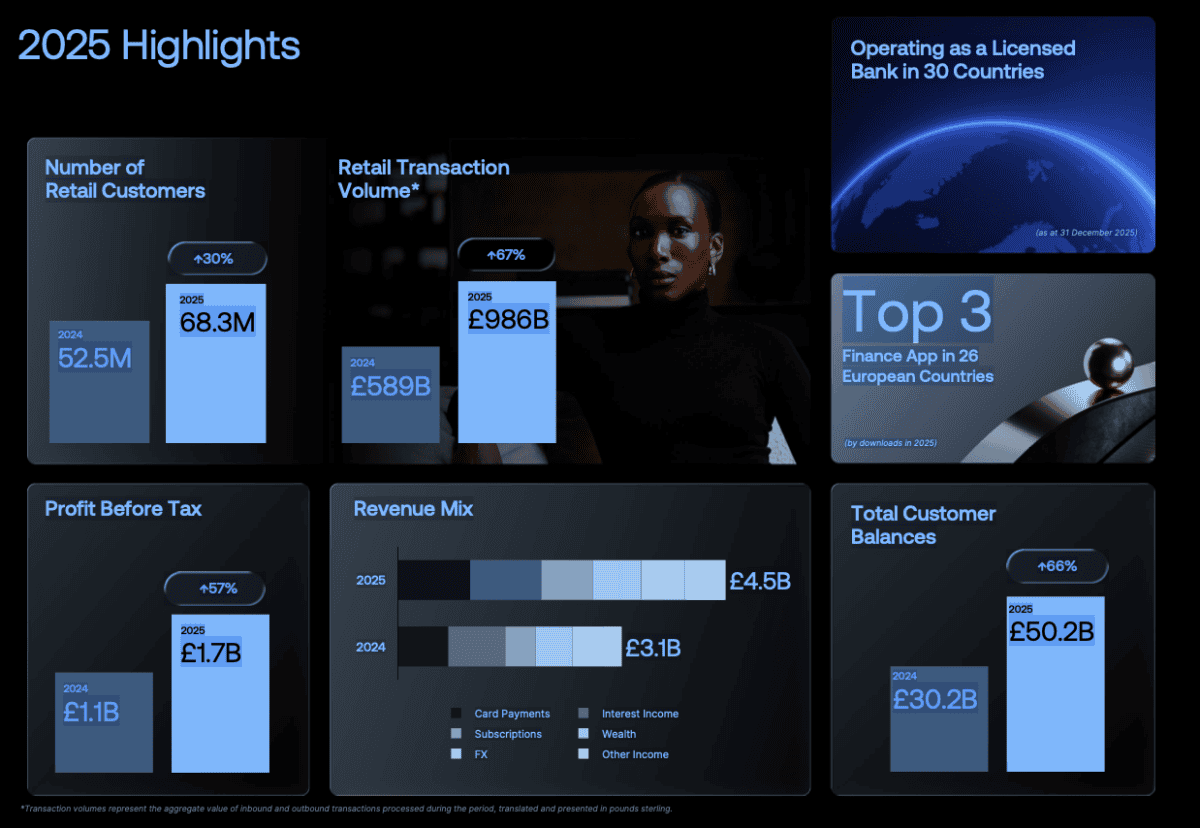
Itâs worth noting that Revolut is having success both at consumer and business level right now. At the end of 2025, it had 68.3m retail customers (+57% year on year) and 767,000 business customers (+33%).
The AI risk
Finally, we have the artificial intelligence (AI) threat. If companies continue to lay off white collar employees, thereâs a genuine chance we could see a spike in loan defaults. This is another risk that canât be ignored. Businesses that have announced layoffs this year include HSBC, Block, Oracle, and Klarna.
The bull case for Lloyds
Now, of course, these risks and scenarios may not come to fruition. We could see oil prices drop, Lloyds fend off Revolut, and laid off employees move into new roles created by AI.
We could also see Lloyds use AI to its advantage and cut its costs significantly. In banking, AI can be used for identity verification, account opening, customer service, regulation scanning, and much more.
If things played out like this, we could see Lloyds shares hit £1.15 again. They could even keep rising beyond this level.
Iâm just not super-confident the shares will return to £1.15 in 2026 though. They could still be worth considering below £1. However, in my view, there are better shares to consider buying today.
The post Lloyds shares: is £1.15 or 70p next? appeared first on The Motley Fool UK.
Should you invest £1,000 in Lloyds Banking Group plc right now?
When investing expert Mark Rogers has a stock tip, it can pay to listen. After all, the flagship Motley Fool Share Advisor newsletter he has run for nearly a decade has provided thousands of paying members with top stock recommendations from the UK and US markets.
And right now, Mark thinks there are 6 standout stocks that investors should consider buying. Want to see if Lloyds Banking Group plc made the list?
More reading
- £5,000 invested in Lloyds shares 5 weeks ago is now worth…
- I hold Lloyds. Is it madness to buy Barclays shares too?
- It’s time we all took a long, cold look at the Lloyds share price
- How many Lloyds shares would I need to target £1,250 annual passive income?
- Should I buy Lloyds shares before the ISA deadline?
Edward Sheldon has positions in Uber. The Motley Fool UK has recommended Block, HSBC Holdings, Uber, Lloyds Banking Group Plc, and Oracle. HSBC Holdings is an advertising partner of Motley Fool Money. Views expressed on the companies mentioned in this article are those of the writer and therefore may differ from the official recommendations we make in our subscription services such as Share Advisor, Hidden Winners and Pro. Here at The Motley Fool we believe that considering a diverse range of insights makes us better investors.