Luke Littler moves to trademark his face in bid to combat AI fakes
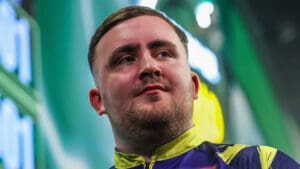
Teenage darts sensation Luke Littler has applied to trademark his own face in a landmark move aimed at protecting his image from AI-generated fakes and unauthorised commercial use.
The 19-year-old, already a two-time World Darts Championship winner, has submitted an application to the UK Intellectual Property Office as concerns grow over the rapid rise of deepfakes and AI-generated content exploiting public figures.
Littler’s likeness is already widely used across commercial products, from branded dartboards and video games to food items, reflecting his meteoric rise as one of the most marketable names in British sport. He has previously secured trademark protection for his nickname “The Nuke” in the United States, underlining the increasing value of his personal brand.
The latest move signals a growing trend among high-profile athletes and celebrities seeking to protect their identity in an era where AI tools can replicate faces and voices with alarming accuracy.
Graeme Murray, a trademark attorney at Marks & Clerk, said such applications are becoming more common as public figures attempt to safeguard their image. He noted that AI-generated content poses a “genuine threat” to the commercial value and goodwill associated with well-known individuals.
“The objective is to create exclusivity around a recognisable appearance that consumers associate with one individual,” he explained. “This prevents third parties from exploiting that identity without consent, particularly in commercial settings.”
The legal landscape, however, remains uncertain. Unlike some jurisdictions, the UK does not recognise a formal “right of personality”, meaning individuals have limited protection over the commercial use of their likeness outside existing intellectual property frameworks.
Iain Connor, intellectual property partner at Michelmores, warned that trademarking a face is not a comprehensive solution. “Even if successful, trade mark protection is limited to specific categories of goods and services,” he said. “It is not a silver bullet against deepfakes.”
He added that previous attempts to protect identity through trademarks have produced mixed results, citing successful and unsuccessful cases involving public figures. The challenge lies in proving that a face or likeness functions as a distinctive commercial identifier.
The move comes as policymakers and legal experts increasingly debate how to regulate AI-generated content. The UK government has already acknowledged potential gaps in existing copyright and IP frameworks, with discussions underway about introducing new “personality rights” to better protect individuals from digital replication.
Littler’s application therefore represents not only a commercial strategy but also a test case for how far current intellectual property law can stretch in the age of generative AI.
Away from the courtroom, Littler continues to dominate on the oche. Fresh from a dramatic comeback victory over Gerwyn Price in Dublin, he admitted he is still adapting to the pressures of fame and fan scrutiny.
But as his profile continues to grow, so too does the need to protect it, not just from rivals on the darts circuit, but from the increasingly sophisticated capabilities of artificial intelligence.
Read more:
Luke Littler moves to trademark his face in bid to combat AI fakes