
Will I lose money if the stock market crashes?


Thereâs one big question everyone thinking of investing in the stock market needs to ask. What if it crashes?
Itâs the thing everyone worries about before getting started. But the prospect is less threatening than it might seem.
One way to lose
The market value of houses going down doesnât matter if you only want to live in one. It’s only a problem in two situations.
One is when people want â or need â to sell. And the other is when thereâs debt involved that they need to refinance.
Outside these situations, though, lower prices arenât an issue. And thereâs no reason why either should be the case with stocks.
Investors should always make sure they have enough excess cash before buying stocks. That means they wonât have to sell in a crash. They should also absolutely avoid using debt to buy investments. That immediately takes the risk of having to refinance to zero.
The only way to lose money in a stock market crash is by selling, either to raise cash or due to debt. But these are risks investors donât have to take.
Warren Buffett
Warren Buffett might be the greatest investor of all time. But this isnât the result of anticipating downturns and getting out of the way.
The Covid-19 pandemic is a great example. When shares crashed, Berkshire Hathaway didnât look to liquidate its stock portfolio.
With a few exceptions, Buffettâs firm didnât sell low. The companyâs financial position was strong enough that it didnât have to.
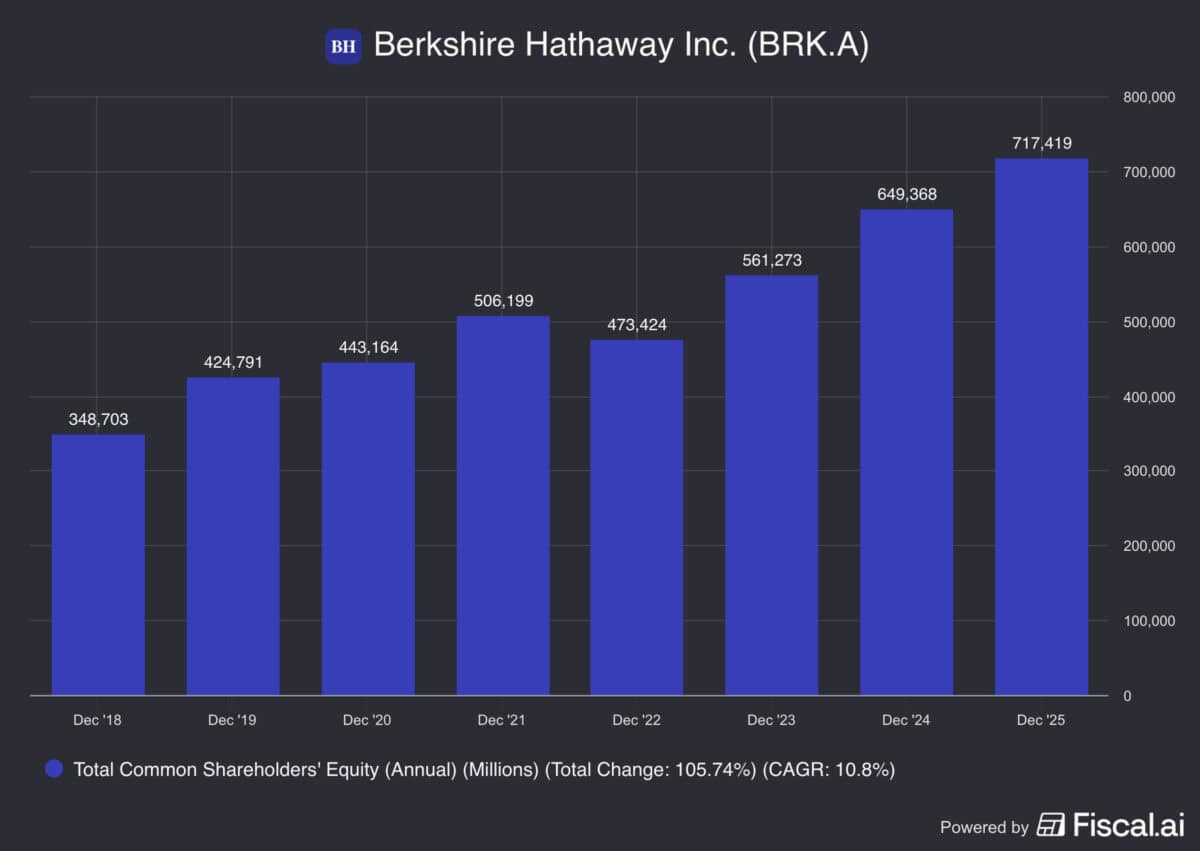
Source: Fiscal.ai
As a result, Berkshireâs book value didnât go down during the pandemic. And itâs now at the highest level itâs ever been.
Stock market crashes are inevitable and unpredictable. But making it to the other side is more important than seeing them coming.
Investing like Buffett isnât easy. But investors can copy the approach of managing their finances to remove the risk of a crash.
Value investing
Buffettâs success wasn’t built on anticipating stock market movements. Itâs the result of finding opportunities to buy stocks when theyâre undervalued.Â
Thatâs what Iâm looking to do in my own portfolio. And one name Iâm looking at right now is US insurance broker Brown & Brown (NYSE:BRO).
The stock price is at a 52-week low. And a big reason for this is that artificial intelligence (AI) products targeting insurance are starting to appear.Â
At the moment, those products mostly target generic lines, which isnât what Brown & Brown specialises in. But that isnât all. The firmâs size allows it to attract better rates from carriers and offer these to customers. And thatâs something AI canât replicate.
Foolish approach
Investing well isnât about knowing when the next stock market crash is coming. But it is about being able to make it through. Investors who buy shares at low prices stand to do well over time â even if the shares go lower in the short term. And thatâs my plan.
Brown & Brown has a business that I think is harder to disrupt than the market realises. Thatâs why Iâm buying it at todayâs prices.
The post Will I lose money if the stock market crashes? appeared first on The Motley Fool UK.
Should you invest £1,000 in Brown & Brown, Inc. right now?
When investing expert Mark Rogers has a stock tip, it can pay to listen. After all, the flagship Motley Fool Share Advisor newsletter he has run for nearly a decade has provided thousands of paying members with top stock recommendations from the UK and US markets.
And right now, Mark thinks there are 6 standout stocks that investors should consider buying. Want to see if Brown & Brown, Inc. made the list?
More reading
- Tesla stockâs down 19% this year. Time to buy?
- How to turn a stock market correction into a £10k passive income
- These legendary growth stocks are down 40% or more. Time to consider buying?
- Is it worth investing in a SIPP in 2026?
- £5,000 invested in Greggs shares 10 days ago is now worthâ¦
Stephen Wright has positions in Berkshire Hathaway and Brown & Brown. The Motley Fool UK has no position in any of the shares mentioned. Views expressed on the companies mentioned in this article are those of the writer and therefore may differ from the official recommendations we make in our subscription services such as Share Advisor, Hidden Winners and Pro. Here at The Motley Fool we believe that considering a diverse range of insights makes us better investors.